Blown-In Insulation Toronto
Cost-effective cellulose and fiberglass insulation for attics and walls. Achieve R-50 to R-60 quickly and affordably.
Licensed | Insured | CUFCA Certified | CaliberQA | OBC Compliant | Free Estimates
How Blown-In Insulation Works
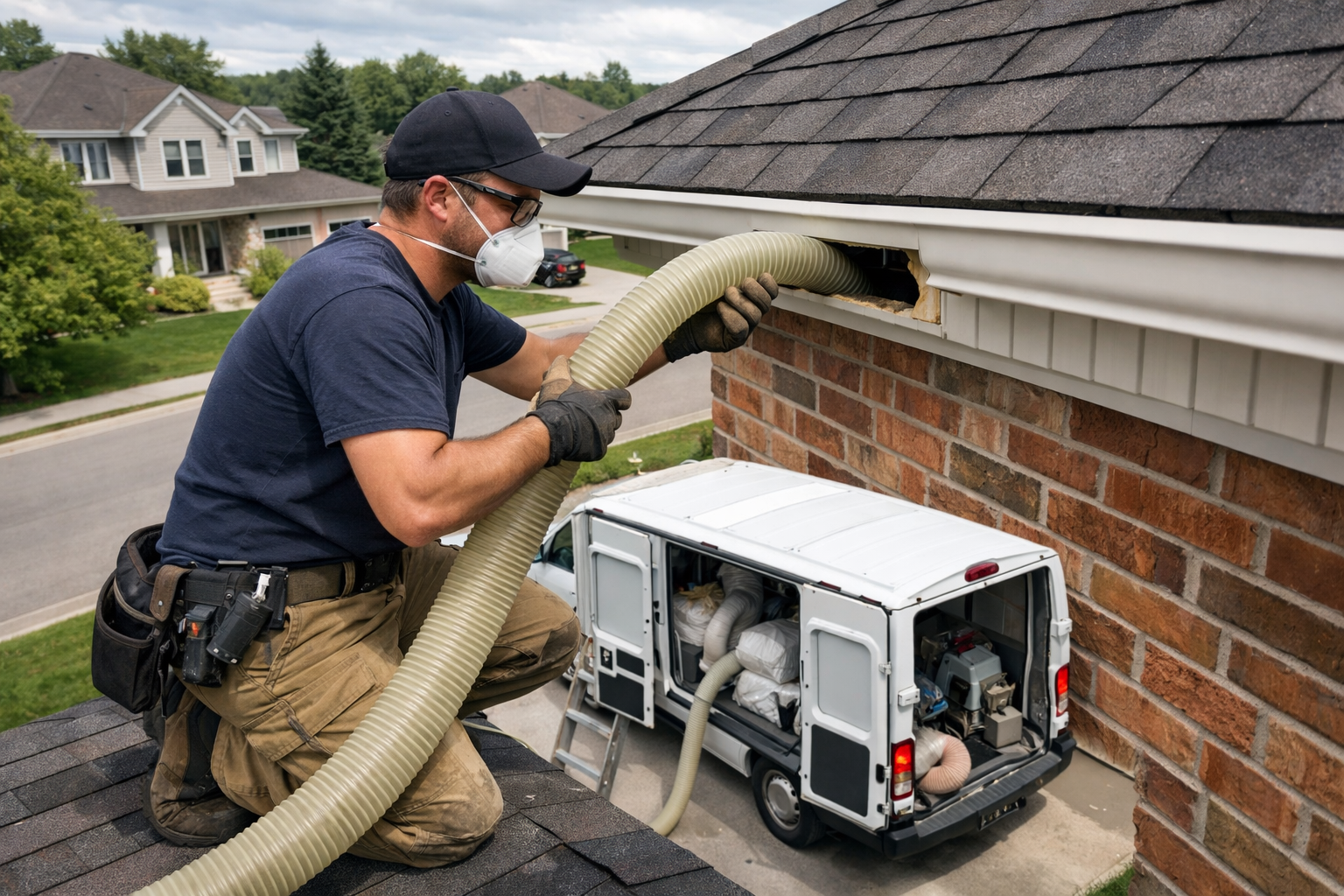
Blown-in insulation is installed using a specialized blowing machine that breaks insulation material into small, fluffy pieces and propels them through a long flexible hose. The installer directs the hose into the target area, whether that is an open attic floor, an enclosed wall cavity, or hard-to-reach spaces around obstacles and framing.
The two primary materials used for blown-in insulation are cellulose (made from recycled newspaper treated with borate for fire and pest resistance) and fiberglass (spun glass fibres). Both are effective insulators, but they differ in R-value per inch, density, settling behaviour, and cost. Our team helps you choose the right material for your specific application.
Blown-in insulation is the most cost-effective way to add R-value to an existing attic. It fills around joists, wires, pipes, and other obstructions that make batt insulation difficult to install properly. The result is more even coverage and fewer thermal gaps than any other insulation method for open attic floors.
Cellulose vs Fiberglass: Detailed Comparison
| Property | Cellulose | Fiberglass |
|---|---|---|
| R-Value per Inch | R-3.5 | R-2.5 |
| Depth for R-50 | ~14 inches | ~20 inches |
| Fire Resistance | Excellent (borate-treated, Class 1) | Good (non-combustible fibres) |
| Settling | 15-20% over time | 5-10% over time |
| Moisture Behaviour | Absorbs and releases moisture (hygroscopic) | Does not absorb moisture |
| Air Sealing | Good (dense pack reduces air flow) | Fair (air moves through fibres) |
| Pest Resistance | Excellent (borate deters pests) | Fair (pests may nest in it) |
| Recycled Content | 80-85% (recycled newspaper) | 20-30% |
| Cost (installed) | $1.50-$2.00/sq ft | $1.75-$2.50/sq ft |
Best Applications for Blown-In Insulation
Attic Floor Insulation
The ideal application for blown-in insulation. An open attic floor allows for even distribution of material to any desired depth. Blown-in fills around joists, pipes, wires, and recessed light housings far more effectively than batts, eliminating thermal gaps. For most Toronto homes, we recommend 17-18 inches of cellulose to achieve R-60.
Learn more about attic insulation →Wall Retrofit Insulation
Many older Toronto homes have hollow walls with little or no insulation. Blown-in insulation is the only practical way to fill these cavities without removing the wall finishes. The process involves drilling small holes (2-3 inches) in the exterior siding or interior drywall, dense-packing cellulose or fiberglass into each cavity, and then patching the holes.
Process: Drill small access holes, blow in dense-pack insulation, patch and paint.
When to Choose Blown-In vs Spray Foam
Choose Blown-In When:
- ✓ You are insulating an open attic floor
- ✓ Budget is a primary concern
- ✓ You need to retrofit enclosed wall cavities
- ✓ You are topping up existing insulation
- ✓ Moisture is not a primary concern
- ✓ The space is accessible and open
Choose Spray Foam When:
- ✓ You need an air and vapour barrier
- ✓ Moisture control is critical (basements)
- ✓ Space is limited (cathedral ceilings)
- ✓ You are insulating rim joists
- ✓ Maximum R-value per inch is needed
- ✓ Structural rigidity is beneficial
Need help deciding? Our team assesses your home and recommends the right insulation for each area. Many projects combine both methods for optimal results. Looking to replace old material first? See our insulation removal services.
RELATED SERVICES
SERVICE AREAS
We provide this service across the Greater Toronto Area:
Frequently Asked Questions
Ready for Blown-In Insulation?
Get a free quote for blown-in cellulose or fiberglass insulation in Toronto
Or Call: (289) 514-0293