Attic Insulation Toronto
Achieve R-50 to R-60 and cut your energy bills by 30-50%. Professional blown-in and spray foam attic insulation for Toronto and GTA homes.
Licensed | Insured | CUFCA Certified | CaliberQA | OBC Compliant | Free Estimates
Why Attic Insulation Matters in Toronto
Toronto's climate is one of extremes. With winter temperatures plunging to -20°C and summer heat climbing above 35°C, your attic is the single most important area to insulate in your home. Heat rises, and without proper attic insulation, up to 25% of your home's heat escapes through the roof during winter months. In summer, an under-insulated attic can reach temperatures above 60°C, forcing your air conditioning to work overtime.
The Ontario Building Code (OBC) requires a minimum of R-50 for attic insulation in new construction, with R-60 recommended for optimal energy performance. Many older Toronto homes, especially those built before 1990, have attic insulation rated at R-20 or less, meaning they are losing significant energy and money every single day.
Upgrading your attic insulation is the most cost-effective home improvement you can make. It delivers the highest return on investment of any insulation project, with most homeowners recouping their investment within 3-5 years through reduced energy bills alone.
Signs You Need New Attic Insulation
Ice Dams on Your Roof
Ice dams form when heat escaping through the attic melts snow on the roof, which refreezes at the eaves. This is a clear sign of inadequate attic insulation and can cause serious water damage.
High Energy Bills
If your heating and cooling bills are consistently higher than your neighbours' or have increased unexpectedly, your attic insulation may be failing. Properly insulated attics can reduce energy costs by 30-50%.
Uneven Temperatures
Rooms that are too hot in summer or too cold in winter, especially on the top floor, indicate that heat is transferring freely through your attic. Proper insulation creates consistent comfort throughout your home.
Visible Deterioration
If you can see the attic floor joists, or if existing insulation is compressed, wet, discoloured, or has settled significantly, it is no longer performing at its rated R-value and needs replacement.
Pest Contamination
Mice, raccoons, and squirrels frequently nest in attic insulation. Their droppings and urine compromise the insulation's effectiveness and create health hazards. Contaminated insulation should be professionally removed and replaced.
Age of Insulation
Insulation that is 20+ years old has likely settled and degraded. Older homes may contain vermiculite insulation, which can contain asbestos and should be tested. Modern insulation delivers far superior R-value per inch.
Blown-In vs Spray Foam: Which Is Right for Your Attic?
| Feature | Blown-In Cellulose | Spray Foam |
|---|---|---|
| R-Value per Inch | R-3.5 | R-6.0 (closed-cell) / R-3.7 (open-cell) |
| Air Barrier | No (requires separate air sealing) | Yes (built-in air seal) |
| Moisture Barrier | No | Yes (closed-cell only) |
| Best Application | Attic floors (open attics) | Cathedral ceilings, attic conversions |
| Cost | $1.50-$2.50/sq ft | $3.00-$6.00/sq ft |
| Fire Resistance | Treated with borate (Class 1) | Requires thermal barrier |
Not sure which option is right for your home? Our insulation experts assess your attic's specific conditions and recommend the best solution. Learn more about blown-in insulation or explore spray foam insulation.
Attic Ventilation: The Other Half of the Equation
Proper attic ventilation works hand-in-hand with insulation. Without adequate airflow, moisture accumulates in the attic, leading to mould growth, wood rot, and premature shingle failure. The combination of soffit vents (intake at the eaves) and ridge vents (exhaust at the peak) creates natural convection that keeps your attic dry and at the right temperature.
During our attic insulation installation, we always ensure that soffit vents remain unblocked by installing proper baffles. These channels maintain airflow from the soffits to the ridge, even with deep insulation coverage. Blocked soffit vents are one of the most common attic problems we find in Toronto homes.
In winter, proper ventilation prevents warm moist air from condensing on cold roof sheathing. In summer, it exhausts superheated air, reducing the load on your air conditioning and extending the life of your roof shingles.
Our Attic Insulation Process
- 1
Assessment
Measure existing R-value, inspect for damage, check ventilation, and identify air leaks.
- 2
Preparation
Seal air leaks around penetrations, install baffle vents, and protect fixtures.
- 3
Installation
Professionally install blown-in cellulose or spray foam to achieve target R-value.
- 4
Verification
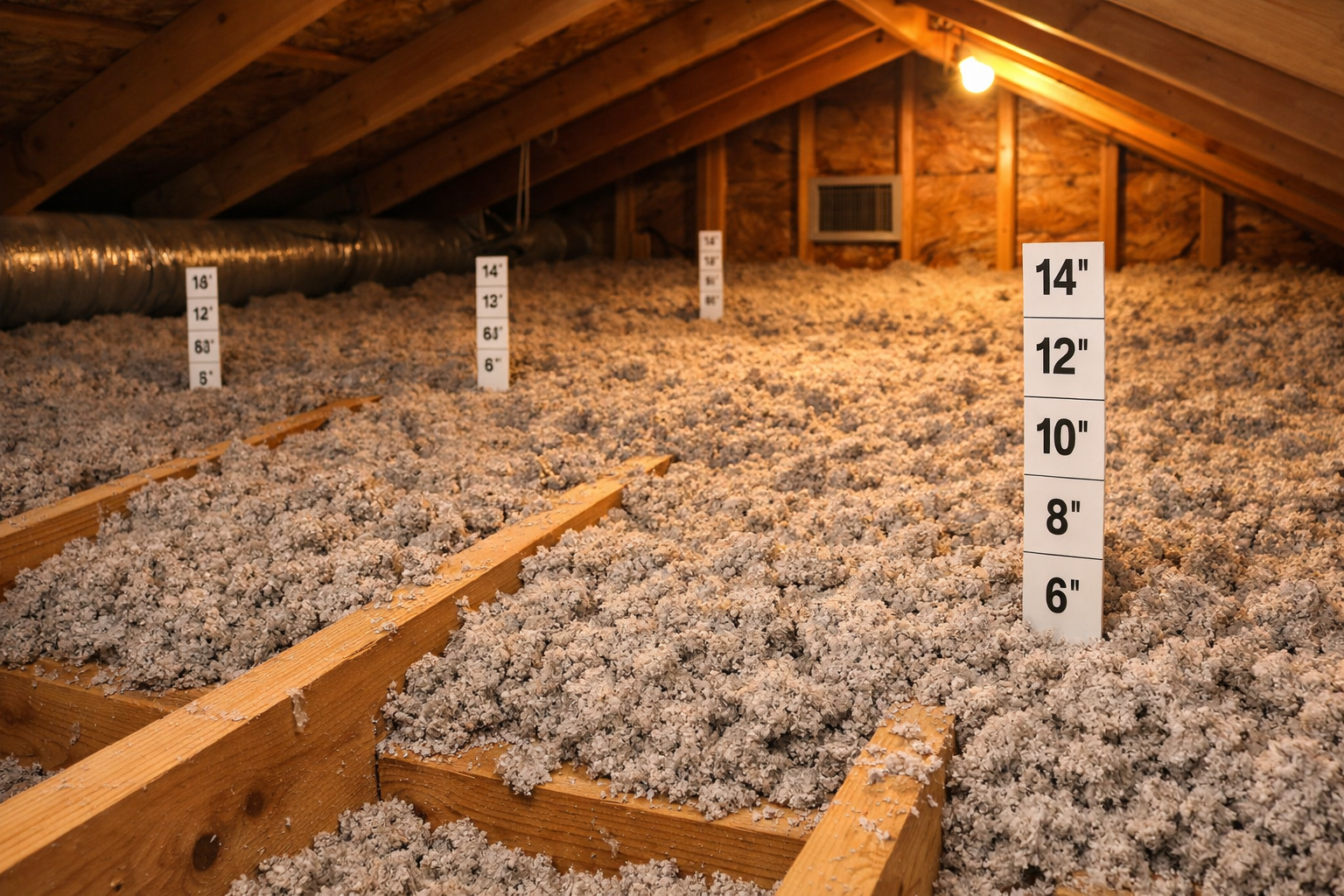
Measure final depth and R-value, photograph for documentation, and provide certificate.
Energy Savings You Can Count On
30-50%
Reduction in heating and cooling costs
$500-$1,500
Typical annual savings for Toronto homes
3-5 Years
Average payback period on investment
Check our insulation calculator to estimate your specific savings, or explore available rebates and incentives that can offset your upfront costs.
RELATED SERVICES
SERVICE AREAS
We provide this service across the Greater Toronto Area:
Frequently Asked Questions
Ready to Upgrade Your Attic Insulation?
Get a free assessment and quote from Toronto's attic insulation experts
Or Call: (289) 514-0293